

Stay With Me
sonnets for the long liturgy of Holy Week

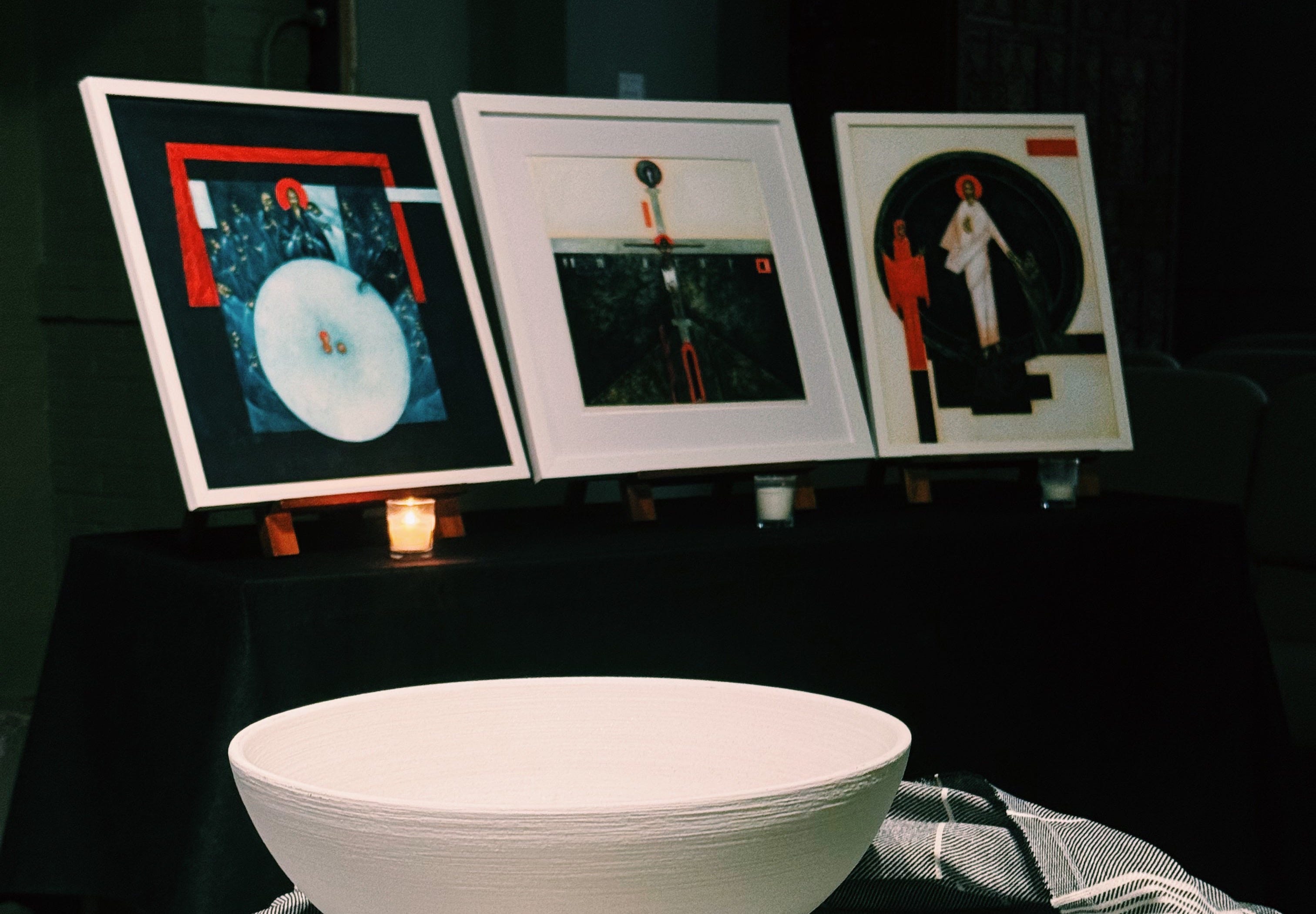
Over the years, I have come to approach the homilies of Holy Week as one long homily, spoken slowly across several days. Not five separate reflections, but a single word, unfolding in stages. Palm Sunday through Easter is not a collection of moments, but one movement. One story. One invitation.
And so, in keeping with that, I am offering five sonnets together that take us from the palms of Palm Sunday, to the Alleluias of Easter Sunday. Each one stands on its own, but they belong to each other. They are meant to be read in sequence, or returned to in pieces, as a way of staying close to the shape of this week.
Speaking of the shape of this coming week, I am finding myself entering in differently than ever before. I’ll explain as best as I am able.
In all our talk of Jesus being our friend, I want to admit something honestly. I do not often stop to ask what kind of friend Jesus might be asking me to be. What kind of friend he might need.
It is easy, and not wrong, to speak of the comfort of his friendship. To speak of his nearness, his care, his listening, his faithfulness to us. But somewhere along the way, I have begun to sense that this is only part of the invitation. That there is another question, quieter and perhaps more demanding. Not only is Jesus my friend, but what kind of friend is he asking me to be for him?
Last year, during Holy Week, I found myself in the early days of grief. A dear friend of mine, my age, had died only a few weeks before. I spent significant time with him and his family toward the end, and in those final days, there was very little to fix, very little to solve. What remained was presence. Sitting. Waiting. Being there.
I did not realize it at the time, but that experience was already beginning to reshape how I understood this most holy week.
Because Holy Week is not simply something we observe. It is something we are drawn into.
The Church has always held these days together as one long liturgy, from Palm Sunday to Easter Sunday. A single story told in time. A single invitation given again and again. And at the heart of it is this: to be present with Christ.
Christ who is present among us when we gather.
Christ who gives himself to us at the Table.
Christ who suffers, who is abandoned, who dies.
Christ who is hidden.
Christ who returns.
Again and again, across these days, there is a quiet refrain. Stay with me. Watch with me. Remain with me.
We have to say this carefully. God is not lacking. God does not need anything from us. And yet, in the mystery of the Gospel, Jesus does not hesitate to draw his disciples close and say, “Watch with me.” He calls them not servants, but friends. Not those who simply carry out tasks, but those who share in his life.
And friendship, at its heart, is not about usefulness. It is about presence.
Holy Week becomes something different when we begin to see it this way. Not primarily as a time to understand more, or even to feel more, but as a time to be with him. To remain with him when we do not fully understand. To stay when there is nothing to fix. To wait in the dark. To recognize him when he comes again.
Palm Sunday invites us to stay with him even when we misunderstand him.
Maundy Thursday invites us to receive his love, not earn it.
Good Friday invites us to remain when all we can offer is our presence.
The Easter Vigil invites us to trust him in the dark.
Easter Sunday invites us to recognize him, and to become a place where others can encounter him.
This is not something we accomplish. It is something we practice, together.
So I want to invite you, as simply as I can, to give yourself to these days. To come as you are. To bring your whole self, including your questions, your fatigue, your grief, your hope, and to place your body within this story.
Not to get it right. Not to have the perfect experience.
But to be present.
Because somewhere in the midst of it, often quietly and without spectacle, we begin to discover that he has been present to us all along.
And perhaps, slowly, we begin to learn what it means to be the kind of friend he is asking for.
In a similar vein, over at Letters to a Young Priest I reflect on the nature of the Eucharist regardless of how many are present. In many of our churches, for a myriad of reasons, these services can be sparsely attended. And here, perhaps, is a particular invitation for those who serve the Church as bishops, priests, deacons, pastors, and leaders: to remain, to keep watch, to be present with Christ, and on behalf of those who cannot be.
Palm Sunday
The Friend We Misrecognize

We spread our cloaks before the One we name,
And call him king with borrowed, urgent breath.
Our praise is true, yet bent toward what we claim
Will rescue us from all we fear as death.
He does not break the words we misapply,
Nor turn aside the hope we half-conceive.
He lets us sing, and lets the meanings lie
Unfinished in the things we would believe.
For he will not be gathered to our need,
Nor shaped into the answers we require.
He comes as other than the forms we plead,
A hidden, unconsenting, quiet fire.
To be his friend is not to understand,
But stay when he slips free from what we planned.
Maundy Thursday
The Friend Who Gives Himself

He kneels, and in his hands the water waits,
No thunder in the basin, no command.
The Holy One moves through our guarded gates
With nothing but a towel within his hand.
He gives himself in things that can be missed,
In bread that breaks, in wine that can be spurned.
No force compels the heart, no tightened fist,
Only a gift that may remain unlearned.
And we resist, not out of strength, but fear
Of being held where we have not achieved.
We turn away from what comes far too near,
A love we have not earned, yet are to receive.
So friendship starts where all our efforts cease,
And we become the ones who learn to receive.
Good Friday
The Friend Who Remains

We said we would not leave, and yet we fled,
Our vows undone by shadows, noise, and flame.
The night grew thick with all we never said,
And silence settled heavier than shame.
He does not turn from us as we withdraw,
Nor trade our absence for a measured end.
He stays within the breaking of the law
Of love, and does not cease to call us friend.
Here God is not the answer we had named,
Nor power bending suffering to release.
Here God is found where all is stripped and claimed
By grief that does not yield itself to peace.
And still he waits, not asking us to save,
But only not to turn from where he gave.
Easter Vigil
The Friend Who Is Hidden

The fire is lit, but does not end the night.
The stories rise before the ending shows.
We speak of life that has not come to sight,
And keep a watch no certainty bestows.
This is the hour where meaning does not press
Its clarity upon the waiting mind.
We hold to what we cannot yet confess
As anything the eye or hand can find.
And still we stay, though nothing answers back,
Though silence stretches thin across the air.
We learn a faith that does not fill the lack,
But keeps its place, and finds him hidden there.
To love him here, where nothing is made plain,
Is how the dark begins to bear his name.
Easter Sunday
The Friend Who Returns

He stands among us, but we do not see.
Our eyes must learn the shape of him again.
For death has not undone his constancy,
Nor sealed the word he spoke in calling friend.
He does not come to gather what we owe,
Nor speak the tally of what we denied.
He brings his peace, and lets the wounded show
A life where even loss is turned inside.
The marks remain, yet they are not the end.
They open into something we must bear.
For now his life is given to his friends,
To be the place his presence enters there.
And we, who fled, are called again to be
The signs of what his risen life can free.